The International Trade Blog  Export Forms
Export Invoice vs. Accounting Invoice: What's the Difference?
On: June 17, 2026 | By:  David Noah |
14 min. read
David Noah |
14 min. read
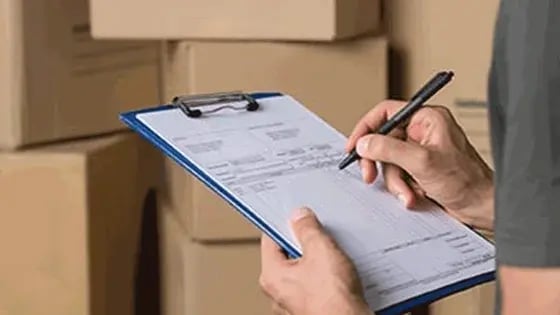 Invoices play an important role in the export process. The invoice is the single export document that describes the entire export transaction from start to finish.
When completed properly, the invoice provides important information to the buyer, freight forwarder, customs, the bank, and other parties in the international transaction. Done wrong, it can cause confusion, delays and disagreements.
Too many exporters—particularly new exporters—don't understand how the invoices they prepare for their exports often require more information than they may include on the invoices they use for their domestic sales. I get too many calls from exporters whose shipments are stuck in customs, or they're having trouble getting paid because their invoice is incomplete.
To help explain how invoices used for your exports may require more information than the invoices you generate for your domestic sales, I like to use the terms export invoices and accounting invoices.
An export invoice is really an umbrella term that encompasses exporting forms like the commercial invoice and the proforma invoice—forms that indicate the buyer and seller of the goods, a description of the items, the items’ value, and the terms or proposed terms of the sale. Many governments use export invoices for calculating and assessing customs duties and taxes.
Sometimes, customers look at our sample export invoice forms and call our office with questions, worried because our forms have either extra information they’re unfamiliar with or think a form is missing information because it doesn’t have the fields they’re used to seeing on their invoices.

.webp?width=300&height=389&name=Proforma%20Invoice%20Download%20Now%20(1).webp)
So, what’s the confusion?
The difference is, our customers are comparing standard export invoices to their own accounting invoices—the invoices they use for their domestic sales. They don’t realize these two versions of the invoice serve different purposes.
That distinction used to surprise some exporters, and I’d occasionally get pushback from companies that would say, “An invoice is an invoice—why do we need another version?” I don’t hear that nearly as much anymore. More exporters now realize that international shipments often require an invoice tailored to the needs of customs, freight forwarders, banks and the buyer—not just the accounting department.
Major Differences Between Invoices
An export invoice will typically include the following information:
Product Classification
Export invoices often include a product classification number—typically a Schedule B number for U.S. export reporting or, in some cases, an HTS number. The first six digits are the international Harmonized System (HS) code, but countries can add additional digits for their own import requirements. That means the U.S. Schedule B or HTS number may not always match the full import classification used by the buyer’s country.
When Electronic Export Information (EEI) filing is required in AES, Census requires a 10-digit Schedule B or HTS classification. However, there may be some times you may not include an HS number on your invoice, which are listed in our article, Why You Shouldn't Include HS Numbers on a Commercial Invoice.
Country of Origin
This is the last country in which the product was manufactured or significantly altered. This may be different from the country in which the supplier or manufacturer is located or where you purchased the product. If materials from multiple countries are used, origin may depend on where the product was substantially transformed into a new article of commerce.
Incoterms 2020 Rules
Incoterms are an internationally recognized standard and are used worldwide in international and domestic contracts for the sale of goods. First published in 1936, Incoterms provide internationally accepted definitions and rules of interpretation for most common commercial terms.

The Proper Value of Goods
Because it may be for customs value only, the export invoice will need to include value of a good that wouldn’t need to appear on an accounting invoice. Exporters have to indicate the true value of goods even if they’re sending the items over for free, as a sample, etc. You wouldn’t do this on your accounting invoice.
You can learn more in our article, Export Compliance: Using the Proper Value on a Commercial Invoice.
Destination Control Statement
The Destination Control Statement (DCS) is a legal statement required on the commercial invoice for certain exports controlled under the Export Administration Regulations (EAR) or the International Traffic in Arms Regulations (ITAR).
Under the EAR, the DCS is required on the commercial invoice when tangible items on the Commerce Control List are shipped, unless an exception applies, such as certain license exceptions or items designated EAR99. Under the ITAR, exporters of tangible defense articles must include the required statement and related information, such as the country of ultimate destination, end user, and license or exemption information.
Even when a DCS is not required for a particular shipment, many exporters choose to include one as a best practice.
Other Details
- Export license information, if appropriate.
- Import country requirements, if known.
- Additional certifications and statements required by the buyer's country.
- U.S. government-issued certifications to be provided.
Depending on the destination country, buyer, bank, carrier or letter of credit requirements, you may need signed originals, multiple copies, specific language, translations or other invoice details. Don’t assume one format works everywhere—confirm the requirements before the shipment leaves.
Of course, the commercial invoice is only one of the documents exporters may need to prepare. For a broader look at the paperwork that may be required for an international shipment, download A Beginner's Guide to Export Forms or watch this video:
The Main Takeaway
Here’s the point: You need to be aware that an export invoice serves a different purpose than an accounting invoice. Each form has information that serves a different purpose, and you can’t substitute one for the other.
If you mistake an accounting invoice for an export invoice, your goods could be held up in customs due to insufficient information, and you could be opening yourself up for fines or penalties based on that incorrect information.
One of the best ways to prevent this from happening is to have a conversation with the buyer during the sales process about the sales contracts, which type of documents will be used, and what type of information should be included on the invoice to help the goods clear customs.
For help creating commercial invoices, proforma invoices and the other documents required for export shipments, thousands of successful exporters use Shipping Solutions export documentation and compliance software. Shipping Solutions helps exporters quickly create accurate export documents, reuse product and customer data, include the right compliance information, and reduce the risk of delays caused by incomplete paperwork. To see how Shipping Solutions software can help your company, register now for a free online demo.
Like what you read? Subscribe today to the International Trade Blog to get the latest news and tips for exporters and importers delivered to your inbox.
This article was first published in March 2017 and has been updated to include current information, links and formatting.